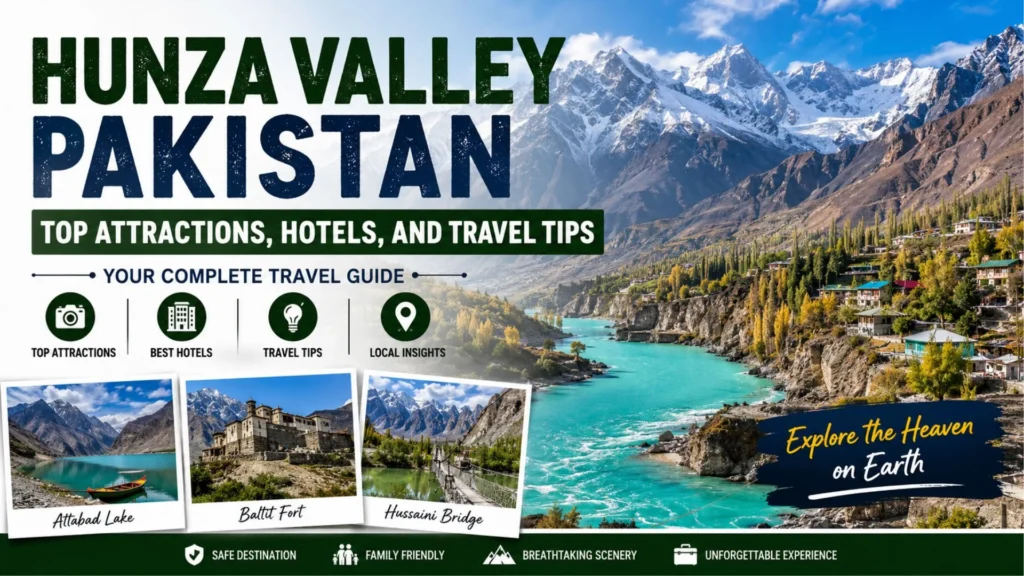
The Hunza Valley is located in the northernmost part of Gilgit-Baltistan, Pakistan, nestled within the majestic Karakoram Mountain Range. Positioned along the legendary Karakoram Highway (KKH), the valley sits at an average floor elevation of 2,438 meters (7,999 feet) and extends all the way up to the Khunjerab Pass at the border with China.
🗺️ Geographic & Strategic Location
- Coordinates: Approximately 36.3°N, 74.6°E.
- Borders: It shares international boundaries with China’s Xinjiang region to the northeast and is separated from Tajikistan by Afghanistan’s narrow Wakhan Corridor to the north.
- Regional Division: The valley covers 10,109 square kilometers and is split into three main geographic zones:
- Lower Hunza (Shinaki): Accessible first from Gilgit; includes Aliabad and Ganish.
- Central Hunza: The primary tourist and cultural hub; includes Karimabad, Altit, and Baltit.
- Upper Hunza (Gojal): Wilder, higher terrain stretching toward China; home to Attabad Lake and Passu.
🚗 Travel Distances & Commute Times
The drive to Hunza is primarily conducted via the Karakoram Highway.
| Route From | Distance | Travel Time by Road | Key Notes |
|---|---|---|---|
| Gilgit City | ~100 km | 2 to 3 hours | The closest airport hub to Hunza. |
| Islamabad | ~600–650 km | 12 to 15 hours | Via the Hazara Expressway and KKH. |
| Skardu | ~270–300 km | 5 to 7 hours | Dramatic mountain terrain route. |
| Naran | ~330 km | 6 to 8 hours | Accessible mainly during summer via Babusar Top. |
| Khunjerab Pass (China Border) | ~155 km | 4 hours | Drive from Central Hunza (Karimabad). |
Travelers from all over the world come here for peace, beauty, and simple life. In this guide, I will share everything you need to know about visiting Hunza Valley, from places to see, where to stay, and how to plan your trip in an easy way.
Hunza Valley Pakistan is a complete travel guide that helps visitors explore one of the most beautiful valleys in northern Pakistan. It covers famous spots, best hotels, and simple travel advice for a smooth journey.
Hunza Valley is located in Gilgit-Baltistan. It is known for its mountains, rivers, forts, and friendly people. Many tourists call it a “heaven on earth” because of its natural beauty.
Why Hunza Valley is Important
Hunza Valley Pakistan is important for many reasons:
- It is one of the safest tourist destinations in Pakistan
- It boosts local tourism and economy
- It preserves ancient culture and traditions
- It offers clean environment and fresh air
- It attracts international travelers every year
How to Plan Your Trip (Step-by-Step Guide)
Hunza Valley Pakistan Travel Planning Process
Follow these simple steps:
- Choose the best time (April to October is ideal)
- Book transport (bus, car, or flight to Gilgit)
- Select your hotel in advance
- Pack warm clothes (weather changes quickly)
- Plan your sightseeing spots
- Keep cash with you (limited ATM access)
Top Attractions in Hunza Valley
Hunza Valley Pakistan Famous Places
Hunza is full of natural and historical places. Here are the must-visit spots:
- Altit Fort – Ancient fort with amazing valley views
- Baltit Fort – A historical landmark over 700 years old
- Attabad Lake – Beautiful blue water lake formed after a landslide
- Passu Cones – Sharp mountain peaks perfect for photography
- Eagle’s Nest Viewpoint – Best sunset view in Hunza
- Hussaini Suspension Bridge – One of the most dangerous bridges in the world
Best Hotels and Stay Options
Hunza Valley Pakistan Accommodation Guide
Here are some popular hotels:
- Luxury hotels in Karimabad
- Mid-range guesthouses
- Budget homestays in villages
Hotel Comparison Table
| Type of Stay | Price Range (Per Night) | Facilities | Best For |
|---|---|---|---|
| Luxury Hotels | High | WiFi, hot water, food | Families, tourists |
| Mid-Range Hotels | Medium | Basic comfort, meals | Couples, groups |
| Guesthouses | Low | Simple rooms, local food | Backpackers, students |
Who Should Visit Hunza Valley
Hunza Valley Pakistan Travel Audience
Hunza is perfect for:
- Nature lovers
- Photographers
- Adventure travelers
- Families looking for peace
- International tourists
- Students on educational trips
Travel Tips for Hunza Valley
Hunza Valley Pakistan Safety and Travel Advice
Here are useful tips:
- Always check weather before traveling
- Carry warm clothes even in summer
- Respect local culture and traditions
- Avoid littering in valleys
- Keep extra cash for emergencies
- Use sunscreen at high altitude
More About Hunza Valley Pakistan
Hunza is not just a travel destination. It is a peaceful experience. People here live a simple life. They eat natural food, speak friendly words, and welcome visitors warmly.
During spring, cherry blossoms cover the valley. In autumn, golden trees make the hills glow. Every season gives a different look to Hunza.
Best Time to Visit Hunza
Hunza Valley Pakistan Seasonal Guide
- Spring (March–May): Flowers and green valleys
- Summer (June–August): Best weather for travel
- Autumn (September–November): Golden trees and cool air
- Winter (December–February): Snow-covered mountains
Food to Try in Hunza
Hunza offers simple but healthy food:
- Chapshuro (local meat pie)
- Diram Pitti (traditional bread)
- Apricot soup
- Organic dried fruits
- Herbal teas
Cultural Experience in Hunza
Hunza Valley Pakistan Culture Overview
Hunza people are known for:
- Long life expectancy
- Friendly nature
- Strong community values
- Traditional music and dance
- Handicrafts and wool products
Travel Costs Estimate
- Transport: Medium cost depending on route
- Hotels: Budget to luxury options available
- Food: Affordable local meals
- Entry tickets: Very low or free at many places
Safety in Hunza Valley
Hunza is one of the safest areas in Pakistan. Tourists can travel freely. Local people are helpful and honest. Still, basic safety care is important during travel.
Photography Tips
Hunza Valley Pakistan Photo Guide
- Visit Eagle’s Nest for sunrise shots
- Capture Attabad Lake in morning light
- Use wide-angle lens for mountains
- Take portraits with local culture
- Shoot during golden hour
FAQs
1. Where is Hunza Valley located?
Hunza Valley is in Gilgit-Baltistan, northern Pakistan, near the China border.
2. Is Hunza safe for tourists?
Yes, Hunza is one of the safest tourist destinations in Pakistan.
3. What is the best time to visit Hunza?
The best time is from April to October when weather is pleasant.
4. How many days are enough for Hunza trip?
A 5 to 7-day trip is enough to explore major attractions.
5. Do we need a guide for Hunza?
A guide is not necessary, but it can help you explore hidden places easily.
Conclusion
Hunza is a place where nature, peace, and culture come together. From mountains to lakes, every view feels special. If you are planning your next trip, wouldn’t you want to experience the beauty of Hunza Valley yourself? At ourKPK learn best and attractive places all over Pakistan.