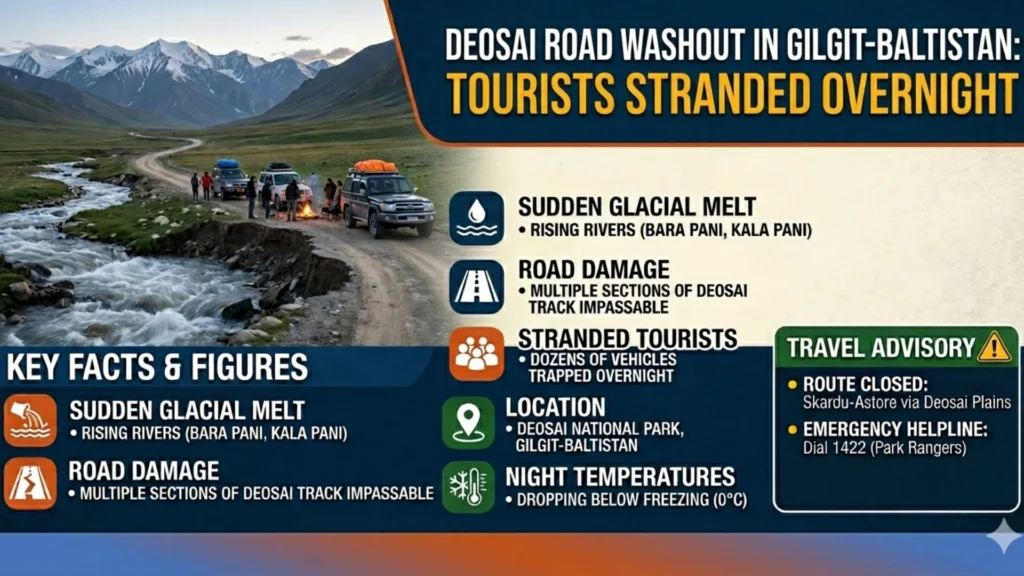
This terrifying scenario became a reality for dozens of families this week as breaking alerts confirmed that the Deosai Road Washed Away: Tourists Stranded Overnight in Gilgit-Baltistan. It serves as a stark reminder of how fast the mountain wilderness can change from beautiful to dangerous.
What is Deosai Road Washed Away: Tourists Stranded Overnight in Gilgit-Baltistan?
When we look at the news headline Deosai Road Washed Away: Tourists Stranded Overnight in Gilgit-Baltistan, we are talking about a sudden environmental crisis caused by rapid summer melting.
To explain this clearly in simple terms, here is what happened:
- Sudden Heatwaves: The high-altitude areas of Gilgit-Baltistan have experienced unseasonably high daytime temperatures over the last few days.
- Rapid Glacial Melt: This intense heat caused the ancient glaciers and heavy winter snowpacks sitting on the mountains around the Deosai plateau to melt at an extremely fast rate.
- Rushing Floodwaters: Millions of gallons of frozen ice turned into rushing liquid water. This extra water flooded into the small streams (nullahs) that run parallel to the tourist driving tracks.
Why is This Situation Important?
Understanding the impact of the Deosai Road Washed Away: Tourists Stranded Overnight in Gilgit-Baltistan crisis is vital for anyone planning a trip to the northern areas of Pakistan.
- It Highlights Real Climate Dangers: This event proves that global warming can create instant flash floods even in high-altitude desert plains that are usually safe during early summer.
- It Impacts Tourist Safety: When roads collapse, hundreds of visitors lose access to safe shelter, food, and clean drinking water in sub-zero night conditions.
How a Mountain Road Washout and Rescue Happens
A mountain road washout does not happen slowly over several days. It takes place in a flash, catching casual travelers completely off guard. Here is the step-by-step process of how this emergency develops and how authorities handle it:
- Step 1: Sudden Temperature Spike: Extreme daytime heat rapidly bakes the high-altitude glaciers, producing heavy water runoff.
- Step 2: Stream Channels Overwhelm: Mountain streams that are usually easy to cross begin to rise rapidly, turning into deep, violent torrents of water.
- Step 3: Bank Erosion Destroys Tracks: The fast water eats the soft soil under the unpaved roads, causing large chunks of the driving track to slide into the riverbed.
- Step 4: Vehicles Become Stranded: Tourists returning from day trips discover the broken path and get stuck in a long line between flooded zones as darkness falls.
- Step 5: Emergency Relief Mobilizes: Local communities, district police, and park rangers step in to distribute warm jackets, blankets, and dry food rations to the trapped travelers overnight.
- Step 6: Heavy Machinery Clears the Path: Once the water levels decrease slightly, engineers use heavy excavators and dump trucks to fill the gaps with heavy boulders and gravel to reopen traffic.
Benefits of Keeping Up with Mountain Travel Warnings
Staying updated with live emergency news about why the Deosai Road Washed Away: Tourists Stranded Overnight in Gilgit-Baltistan occurred provides massive practical benefits for your travel group:
- Protects Human Life: Knowing which routes are currently underwater prevents you from driving your family straight into a high-altitude emergency zone.
- Saves Significant Money: You can quickly cancel or delay your expensive jeep rentals, domestic flights, and hotel bookings before you cross into blocked areas.
Deosai Route Status & Hazard Comparison Table
Before you ever leave your hotel room in Skardu or Astore, you should compare the current road conditions across different sections of the plateau.
| Road Section Name | Level of Damage | Current Traffic Status | Main Hazard to Avoid |
| Bara Pani Crossing | Severe Washout | Completely Closed | Deep, fast-moving water currents and broken tracks |
| Kala Pani Section | Moderate Flooding | Restricted to 4×4 Emergency Only | Slippery mud banks and heavy water flow |
| Sadpara Lake Track | Minor Mudslides | Open with Slow Delays | Small rocks falling from nearby cliffs |
| Chilum Valley Route | Low to Moderate | Open with Extreme Caution | Rising water levels in small roadside streams |
Who is This Critical Travel Warning For?
This emergency advisory regarding the Deosai Road Washed Away: Tourists Stranded Overnight in Gilgit-Baltistan situation is specifically written for:
- Vacationing Families: Tourists currently staying in Gilgit, Skardu, or Astore who planned to visit Deosai National Park this week.
- Local Jeep Drivers: Commercial mountain drivers who need to verify if their standard paths are physically passable before accepting new clients.
- Tour Agencies: Companies managing group trekking trips who must adjust their daily routes to keep their clients out of danger.
Essential Survival Advice for Stranded Mountain Travelers
If you ever find yourself caught on the high plains due to a sudden road washout, follow this practical advice to stay safe until help arrives:
- Conserve Your Fuel Carefully: Do not leave your vehicle’s engine and heater running continuously all night. Run the engine for 10 to 15 minutes every hour to stay warm, then turn it off to save your gas.
- Dial the Ranger Rescue Line: If your phone finds a weak signal, dial 1422 immediately to report your location to the park ranger emergency team.
FAQs (Frequently Asked Questions)
Q1: Can heavy 4×4 SUVs still cross the washed-away road sections?
No. When a road is fully washed away, the ground turns into unstable, sinking mud. Trying to drive across rushing water can cause your vehicle to flip over or get carried away by the strong current.
Q2: Are there hotels or emergency shelters inside Deosai National Park?
No. Deosai is a protected wildlife zone, meaning there are no permanent concrete hotels, shops, or buildings inside the park boundaries. Travelers must rely on their own vehicles, camping tents, or emergency rescue camps.
Q3: How long does it usually take for rescue teams to fix a washed-out mountain road?
Depending on the size of the collapsed track and the speed of the river water, it can take anywhere from 24 hours to three full days for engineering teams to clear the debris and build a stable temporary pass.
Q4: Is it safe to drink water from the mountain streams if we are stuck?
While the water coming from melting glaciers looks clean, it can carry fine glacial silt and dirt that will upset your stomach. It is always best to carry extra mineral water bottles or use water purification tablets.
Q5: What should I do if my trip to Deosai is canceled due to road damage?
You should immediately redirect your tour to safer, lower-altitude valleys in the region, such as Shigar or Khaplu, where the roads are paved and unaffected by sudden glacial lake overflows.
Conclusion
The recent flash floods and road collapses remind us that nature is always in total control of our travel plans. While the high alpine plains of Gilgit-Baltistan offer some of the most beautiful views in the world, sudden glacial melts can change a fun road trip into an intense survival scenario within a single afternoon. If you have plans to head up north soon, always put your physical safety first, listen to the advice of local drivers, and wait for the roads to be cleared by rescue teams.At ourKPK we monitor real-time field reports from local drivers, weather data from the Pakistan Meteorological Department, and safety announcements from Gilgit-Baltistan disaster management authorities.
Would you remember to double-check the live road conditions with the authorities before driving up to a high-altitude national park this summer?